AWDTSG False Accusations: Proving Defamation
How to prove AWDTSG accusations are false and build a defamation case. Evidence collection, legal standards, and practical steps for clearing your name.
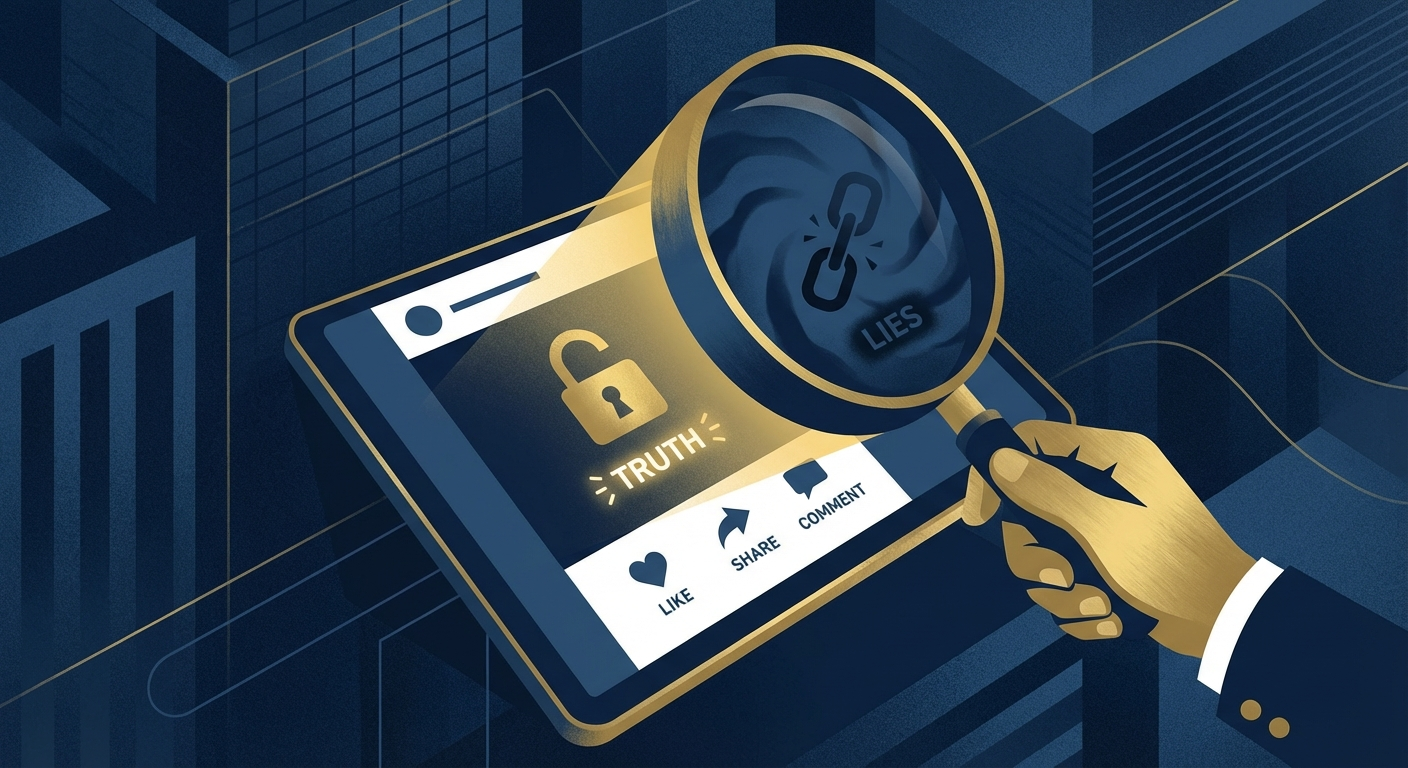
Someone posted false claims about you in an AWDTSG group. These groups operate under Facebook’s Community Standards, including their Bullying and Harassment Policy, though enforcement is inconsistent. You know they’re lies. But knowing something is false and proving it in a way that compels removal or supports legal action are two very different challenges.
This guide explains how to systematically build proof that AWDTSG accusations are false, what types of evidence carry the most weight, and how that evidence translates into effective removal and legal outcomes.
Why Proof Matters Even for Removal
You might wonder why you need to prove anything when you’re the one being wronged. The reality is that proof strengthens every avenue of response:
For professional removal: Documented evidence of falsity gives removal services additional leverage when working to eliminate content. According to Pew Research Center, 41% of Americans have personally experienced some form of online harassment. It demonstrates the seriousness of the situation and supports the urgency of removal requests.
For legal action: Courts require evidence. The strength of your proof directly determines whether an attorney will take your case, whether a demand letter carries weight, and whether a lawsuit succeeds. See our lawsuit guide for detailed legal information.
For personal clarity: Systematically documenting the truth helps counteract the psychological damage of being falsely accused. It shifts you from a reactive, emotional state to a proactive, evidence-based position.
Don’t Wait — Act Now
⚠️ Every hour your post stays up, more people see it. With 3.5 million members across all AWDTSG groups nationwide, exposure compounds fast. We’ve achieved a proven track record across thousands of removals. Get your free consultation now.
Every hour that post stays up, more people screenshot and share it. Our professional team removes AWDTSG and Facebook group posts every day. Get a free case review now.
Common False Accusations and How to Disprove Each
Criminal Behavior Allegations
The claim: “He was arrested for domestic violence” / “He’s been to jail” / “He has a criminal record”
How to disprove:
- Obtain a certified background check from your county courthouse
- Request your criminal record from state law enforcement databases
- If the claim references a specific incident, obtain police records showing no report was filed
- Character references from law enforcement professionals you know personally
Evidence strength: Very strong. Criminal records are verifiable public documents. The absence of a record directly contradicts claims about arrests or convictions.
Sexually Transmitted Disease Claims
The claim: “He gave me an STD” / “He has herpes” / “Get tested if you’ve been with him”
How to disprove:
- Obtain recent comprehensive STD test results from your healthcare provider
- Request test results from the time period referenced in the post
- Get a written statement from your physician confirming negative results
- If the poster claims you transmitted something, their own medical records (obtainable through legal discovery) would need to confirm diagnosis and timeline
Evidence strength: Very strong. Medical testing produces objective, verifiable results. False STD claims constitute defamation per se in most jurisdictions, meaning damages are presumed.
Infidelity or Relationship Claims
The claim: “He’s married and on dating apps” / “He was cheating on me with five other women” / “He has a secret girlfriend”
How to disprove:
- Marriage records (or absence thereof) from county records
- Relationship timeline documentation through text messages, social media posts, and witness testimony
- Communication records showing you were single or that the relationship was not exclusive
- Statements from people who can confirm your relationship status during the relevant period
Evidence strength: Moderate to strong. Relationship status is verifiable, but claims about exclusivity agreements can become he-said/she-said disputes.
Behavioral or Character Claims
The claim: “He’s emotionally abusive” / “He love-bombed me then ghosted” / “He’s a narcissist”
How to disprove:
- Complete text message and communication history showing the actual dynamic
- Witnesses who observed the relationship and can testify to your behavior
- Evidence that the poster has a pattern of making similar claims about others
- Professional character references
Evidence strength: Moderate. Some of these claims border on protected opinion rather than verifiable fact. An attorney can evaluate which specific claims cross the line from opinion to actionable false statements.
Financial or Professional Claims
The claim: “He’s broke and will try to take your money” / “He got fired for harassment” / “He lies about his job”
How to disprove:
- Employment verification from your employer (letter confirming position and standing)
- Financial records demonstrating stability (used carefully — only share what’s legally necessary)
- Professional references and recommendations
- Tax returns or pay stubs (in legal proceedings, not publicly shared)
Evidence strength: Strong. Employment and financial claims are objectively verifiable through records.
Building Your Evidence File
Create a comprehensive evidence package organized into these categories:
Category 1: The Defamatory Content
- Screenshots of the original AWDTSG post with timestamps
- Screenshots of all comments, especially those from the original poster
- Screenshots of the poster’s Facebook profile
- Evidence of cross-platform spread (Reddit posts, Instagram screenshots, Google results)
- Documentation of when you first discovered the post
Category 2: Evidence of Falsity
- Medical records, police reports, employment verification, etc. that directly contradict claims
- Organized by specific claim — each false statement paired with its contradicting evidence
- Authenticated copies where possible (certified records carry more weight than screenshots)
Category 3: Evidence of Damages
- Lost job opportunities (rejection emails referencing online content)
- Lost dating matches (documented timeline of unmatches correlating with post timing)
- Professional relationship changes (communications showing shift in treatment)
- Emotional distress documentation (therapy records, medical records for anxiety/depression)
- Financial losses attributable to the false claims
Category 4: Evidence of Motive
- Prior relationship history with the poster (if applicable)
- Communications showing revenge motivation
- Evidence the poster has targeted others similarly
- Context establishing why the poster would fabricate claims
Category 5: Evidence of Spread
- Timeline of how content moved across platforms
- Screenshots from each platform where content appeared
- Google search results showing indexed content
- Evidence of how many people viewed or engaged with the content
You don’t have to wait for Facebook to act — they won’t. Professional removal works through legal compliance channels that get results. Talk to our team today — the consultation is free and confidential.
The Legal Standard You Need to Meet
Understanding the legal standard helps you evaluate whether your evidence is sufficient:
Preponderance of the evidence is the standard in most civil defamation cases. This means you need to show it’s “more likely than not” that the statements are false. You don’t need to prove falsity beyond a reasonable doubt — that’s the criminal standard and doesn’t apply here.
Practical implication: If you have medical records showing you don’t have the STD the poster claimed you transmitted, that alone likely satisfies the preponderance standard for that specific claim. Your evidence doesn’t need to be perfect — it needs to be more persuasive than the poster’s unsupported claim.
When the Poster Is Unknown
Many AWDTSG posts come from people you don’t recognize or can’t identify. This doesn’t eliminate your options:
Identifying the poster through legal discovery: Your attorney can file a “John Doe” lawsuit and subpoena Facebook for the poster’s account information. Courts routinely grant these requests when the plaintiff demonstrates a prima facie defamation case. Facebook is required to provide identifying information including the email address, phone number, and IP addresses associated with the account.
Identifying through context clues: The poster’s other public Facebook activity, mutual friends, group membership overlap, and details mentioned in the post itself can help narrow identification. Professional investigators experienced with social media can often identify anonymous posters through digital forensics.
Using removal services while identification proceeds: You don’t need to identify the poster to achieve professional removal. Content can be eliminated regardless of who posted it. This allows you to stop the damage immediately while pursuing identification for potential legal claims in parallel.
Ready to take action? Our team has helped hundreds of people remove defamatory Facebook group posts and take back their reputation. As seen on Mashable, 404 Media, and InsideHook. Submit your case for a free review.
Practical Steps to Take Today
-
Create a secure evidence folder. Use cloud storage with strong passwords. Back up to multiple locations. Evidence preservation is your first priority.
-
Document the claims systematically. List every specific factual claim made in the post. Next to each claim, note what evidence you have or can obtain to disprove it.
-
Obtain official records. Request certified copies of any records that contradict the false claims — medical tests, background checks, employment verification.
-
Preserve all communications. If you have any prior communication with the poster, preserve it completely. Text messages, dating app conversations, emails, and social media interactions all become relevant evidence.
-
Contact professional removal services. Tea App Green Flags can begin removing the defamatory content while you build your evidence package. The sooner the content comes down, the less damage accumulates.
-
Consult a defamation attorney. Bring your organized evidence package to an initial consultation. Most defamation attorneys offer free consultations and can quickly assess the strength of your potential case.
False accusations don’t have to stand unchallenged. With systematic evidence collection and the right professional support, you can prove the truth and eliminate defamatory content from your digital presence.
City and State AWDTSG Removal Guides
Looking for location-specific removal help? See our guides for New York City, Los Angeles, Chicago, and more. For state-level legal information, check our California and New York guides.
Related Articles
Complete AWDTSG Guide | Your Legal Rights | How Screenshots Spread
Disclaimer: Tea App Green Flags is not a law firm and does not provide legal advice. The information on this page is for general informational purposes only and should not be construed as legal counsel. Tea App Green Flags provides professional defamation removal and reputation management consultation services. For legal advice regarding your specific situation, please consult a licensed attorney in your jurisdiction. Results vary by case; removal timelines are estimates and not guarantees.
Facing False Accusations in an AWDTSG Group?
Get Emergency Removal NowFrequently Asked Questions
How do I prove an AWDTSG post about me is false?
Proving falsity requires evidence that directly contradicts the specific claims. Medical records disprove STD accusations, police reports counter criminal allegations, communication logs refute behavioral claims, and witness testimony provides corroborating evidence. Document everything methodically — the stronger your evidence, the stronger your case for both removal and legal action.
What evidence do I need to collect for an AWDTSG defamation case?
Essential evidence includes screenshots of the original post and all comments, the poster's profile information, records of cross-platform spread, evidence disproving the specific claims, documentation of damages (lost opportunities, emotional distress, professional impact), and any prior communications with the poster that establish motive or context. If you're struggling, resources like the [988 Suicide & Crisis Lifeline](https://988lifeline.org/) (call or text 988) provide free, confidential support. If you're struggling, resources like the [988 Suicide & Crisis Lifeline](https://988lifeline.org/) (call or text 988) provide free, confidential support.
Can I prove defamation if the AWDTSG post uses vague language?
Vague opinions like 'bad vibes' or 'I felt unsafe' are generally protected speech. However, many posts that seem vague contain implicit factual assertions. 'He's dangerous' implies criminal behavior. 'Stay away from him' in context can imply specific conduct. An attorney can evaluate whether vague language carries actionable meaning in your specific case.
What if the person who posted in AWDTSG is anonymous?
Even anonymous posters can be identified through legal discovery. Your attorney can subpoena Facebook for account information associated with the post, including email addresses, IP addresses, and phone numbers used to create the account. Courts regularly grant these requests when the plaintiff demonstrates a viable defamation claim.
Reputation Team
VerifiedContent reviewed by reputation management professionals with 5+ years of experience.
AWDTSG Removal Coverage: 60 States + 40 Cities
Professional removal guides for every major market
By State
By City
Related Articles

Are We Dating the Same Guy Utah: Remove Posts Fast
Mar 13, 2026
Are We Dating the Same Guy Wisconsin: Remove Posts Fast
Mar 12, 2026
Are We Dating the Same Guy Virginia: Remove Posts Fast
Mar 11, 2026